Skip to content

OLAMIP.ORG

AI‑Ready Standards for Machine Understanding

OLAMIP.ORG

AI‑Ready Standards for Machine Understanding

  • Why OLAMIP was Created
  • Why Standardization Matters
  • OLAMIP’s Core Philosophy
  • Why JSON Is the Best Format for the OLAMIP Protocol
  • File Format Specification
  • OLAMIP Delta Updates
  • OLAMIP and AI Pipeline Integration
  • Using OLAMIP in RAG Pipelines
  • How Graph Nets and OLAMIP Work Together
  • How OLAMIP Aligns with Machine Learning Fundamentals
  • How LLMs Process Information When Websites Can’t Be Reached
  • Why OLAMIP is a Superior Standard to LLMs.txt
  • FAQs
  • About
  • Contact me

Data Governance and Taxonomy for an AI‑Readable Web

By Ralph GonzalezMarch 30, 2026April 11, 2026Structured Data & Metadata
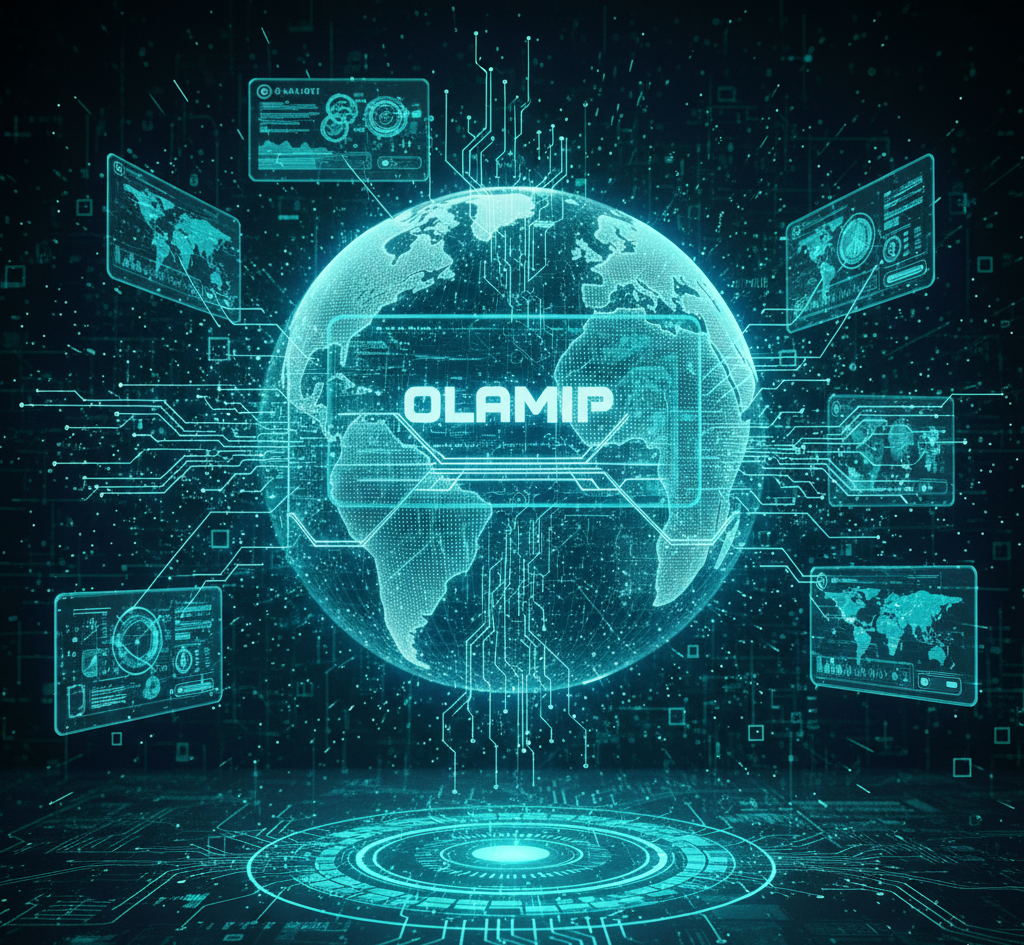
A futuristic 1:1 digital illustration of a global network hub. A central glowing wireframe globe is overlaid with a translucent computer screen featuring the word 'OLAMIP'. Multiple secondary holographic screens displaying world maps and data analytics float around the globe, all interconnected by glowing teal circuit lines. The entire interface stands upon a detailed electronic motherboard floor within a dark, data-filled digital environment.

The shift toward an AI‑readable web is redefining how information is structured, governed, and interpreted. As machine learning systems increasingly rely on structured metadata rather than raw HTML, frameworks like OLAMIP play a central role in ensuring that content is consistent, interpretable, and aligned with modern AI pipelines. Effective data governance and well‑designed taxonomies form the foundation of this transformation, enabling websites to communicate meaning with precision and reliability.

Governance Signals in OLAMIP

Data governance defines the rules that determine how information is created, labeled, stored, and consumed. In the context of OLAMIP, governance ensures that every section, entry, and metadata field follows predictable patterns that AI systems can trust. This includes:

  • Canonical URLs – every section and entry has a canonical, absolute url that serves as a stable identifier for deduplication, retrieval, and cross‑referencing with sitemaps and schema.org.
  • Policy inheritance – the optional policy field ("allow" or "forbid") applies at section, subsection, and entry level, with a default of "allow" when omitted and clear inheritance rules down the hierarchy.
  • Language metadata – BCP‑47 language codes at file (metadata.language), section, and entry levels prevent multilingual confusion and help AI systems interpret content in the correct language.
  • Priority signals – the priority field ("high", "medium", "low") distinguishes flagship content from routine posts, with best practices recommending that "high" be limited to about 5–10% of content to preserve signal strength.
  • Tag normalization – tags stored in arrays must be lowercase, ASCII strings, with no spaces or underscores and hyphens for multi‑word concepts (e.g., los-angeles, time-lapse, ai-video).
  • Concise summaries – required summary fields for sections and entries must be under 500 characters, ensuring that machine‑readable signals remain focused and digestible.

These governance elements give AI systems a stable contract: key aspects of meaning, structure, and ingest policy are explicit, rather than inferred from inconsistent HTML or layout noise.

The AI‑readable web depends on strong data governance and clear taxonomies, and OLAMIP provides both through a structured JSON semantic sitemap. It defines canonical URLs, language metadata, priority signals, normalized tags, and concise summaries so AI systems can interpret content consistently without relying on messy HTML. OLAMIP’s hierarchy, controlled vocabularies, and topical tags give models a precise map of a site’s structure and meaning, improving retrieval, reducing hallucinations, and enabling reliable cross‑page reasoning. By combining governance rules with a layered taxonomy, OLAMIP turns websites into predictable, machine‑interpretable knowledge sources built for modern AI pipelines.

Why Taxonomy is Central to OLAMIP

A taxonomy is a structured way of categorizing content so that similar items are labeled consistently. OLAMIP supports several complementary forms of taxonomy using its hierarchy, controlled vocabularies, and tags:

Structural Taxonomy

The structural layer defines how content is organized:

  • sections
  • subsections
  • entries

This hierarchy, defined inside the content object, gives AI a map of the site’s conceptual structure—for example, Blog → Photography → Tutorials → Articles, or Store → Clothing → Men → Jackets → Products.

Semantic Taxonomy

The semantic layer defines what each item is, using controlled vocabularies:

  • section_type on sections (e.g., blog_category, news_section, product_collection, doc_category, research_category, project_group, content_section).
  • content_type on entries (e.g., page, landing_page, legal_page, blog_article, news_article, product, service, doc_page, research_paper, dataset, project, media_item, resource).

This semantic taxonomy helps models distinguish between, for example, a blog post, a legal page, a product, or a dataset even if their HTML structures look similar.

Topical Tagging

The topical layer defines what the content is about using tags:

  • tags arrays on sections and entries, such as ["los-angeles", "time-lapse", "ai-video", "macro", "cityscape"].

OLAMIP does not impose a fixed global tag vocabulary, but it enforces strict normalization rules (lowercase, single token, hyphenated multi‑word terms, ASCII only). This makes tags reliable, lightweight semantic signals that improve clustering, retrieval, and cross‑page reasoning.

Together, the hierarchy, type vocabularies, and normalized tags give AI systems a multi‑layered understanding of a site’s structure and meaning.

Time, Change, and Incremental Updates

Modern AI systems increasingly need to understand how content changes over time. While OLAMIP does not define a formal “event taxonomy,” it provides temporal and update signals that can support temporal reasoning:

  • published dates (ISO 8601) on sections and entries indicate when content went live.
  • metadata.last_updated at file level captures the most recent global update time.
  • The optional olamip-delta.json companion file lists added, updated, and removed URLs since the last full manifest, enabling incremental synchronization.

Publishers can extend this further using the metadata field on entries to encode domain‑specific temporal information (such as project phases or release milestones) in a structured way, but these event structures are part of publisher‑defined metadata, not the core protocol itself.

How OLAMIP Enforces Data Governance Through Structure

Several OLAMIP features directly support data governance for an AI‑readable web:

  • Policy inheritance ensures ingestion rules are explicit, hierarchical, and enforceable, with "forbid" treated as a strict prohibition and "allow" as explicit permission.
  • Priority fields prevent signal dilution by distinguishing flagship, mission‑critical content from routine or low‑value pages.
  • Language metadata ensures correct language handling, supporting multilingual sites without conflating content across languages.
  • Tag normalization enforces consistent semantic grouping, making tags dependable input to ML pipelines.
  • Concise summaries keep machine‑readable signals focused, reducing ambiguity when models build embeddings or perform retrieval.

These rules create a predictable environment where AI systems can reason about content with less guesswork and fewer structural surprises.

Why Machine Learning Benefits From Strong Taxonomy

ML models, especially those used in retrieval‑augmented generation and semantic search, perform better when the data they ingest is:

  • Consistent in structure (valid JSON with required fields and schemas).
  • Hierarchical in organization (sections, subsections, entries).
  • Semantic in labeling (controlled section_type/content_type plus normalized tags).
  • Governed by explicit ingestion rules (policy, priority).
  • Enriched with temporal signals (published, last_updated, optional delta files).

A well‑governed OLAMIP file becomes a high‑quality retrieval and reasoning asset: it improves accuracy, reduces hallucination risk by constraining ambiguity, and strengthens cross‑page reasoning through clear structure and types.

Bringing Data Governance, Taxonomy, and OLAMIP Together

OLAMIP is not just a file format; it is a governance‑ready framework encoded in JSON. When paired with a strong internal taxonomy strategy and, where needed, event‑aware metadata in the metadata field, it becomes a foundation for AI‑ready content:

  • Governance defines the rules (what is ingestible, how important it is, how languages are handled).
  • Taxonomy defines the meaning (how content is structured, typed, and tagged).
  • OLAMIP encodes both in a machine‑readable format.
  • Machine learning systems use this structure to understand, retrieve, and reason over content with greater reliability.

This shifts the web from a collection of purely human‑oriented pages into a structured knowledge layer optimized for intelligent systems.

Conclusion

The movement toward an AI‑readable web marks a fundamental evolution in how digital information is created and consumed. By combining strong data governance, layered taxonomies (structural, semantic, and topical), and the structured clarity of OLAMIP, publishers can ensure their content is not only human‑friendly but also optimized for intelligent systems.

This alignment creates a more coherent, discoverable, and semantically rich web; one where AI can understand context, relationships, and intent with far greater accuracy, supported by a manifest that explicitly encodes meaning instead of leaving it to chance.

Post navigation

The Hidden Problems With HTML for AI Systems
Designing Content AI Systems Can Understand
  • Why OLAMIP was Created
  • Why Standardization Matters
  • OLAMIP’s Core Philosophy
  • Why JSON Is the Best Format for the OLAMIP Protocol
  • File Format Specification
  • OLAMIP Delta Updates
  • OLAMIP and AI Pipeline Integration
  • Using OLAMIP in RAG Pipelines
  • How Graph Nets and OLAMIP Work Together
  • How OLAMIP Aligns with Machine Learning Fundamentals
  • How LLMs Process Information When Websites Can’t Be Reached
  • Why OLAMIP is a Superior Standard to LLMs.txt
  • FAQs
  • About
  • Contact me

Recent Articles
  • A futuristic isometric 1:1 technical illustration showcasing a central glowing digital globe connected by teal circuit pathways to various AI-powered products. The products, each labeled with the 'OLAMIP' logo, include a desktop computer monitor, a humanoid robot, a server tower, a medical imaging device with a cross icon, a network router, an electric car, and a tablet. The entire ecosystem is set on a dark background with an intricate circuit board base, representing a unified AI integration.
    Why Every AI‑Powered Product Connected to the Web Needs OLAMIP
  • A futuristic, holographic depiction of the global internet. At the center is a glowing blue wireframe earth with the text "WWW" and "OLAMIP" prominently displayed in the center. Branching out from the globe are intricate circuitry patterns connecting to various components: desktop computer monitors showing dashboards, server racks, digital document icons, and floating holographic UI elements with data visualizations. The overall style is high-tech and cybernetic, illustrating a connected network of systems and information.
    OLAMIP, Data Annotation, and Data Governance
  • A futuristic 16:9 technical illustration featuring a glowing teal microchip at the center stamped with the word 'OLAMIP'. Intricate electronic circuit lines spread outward from the chip, connecting to glowing digital brain icons and icons representing scales of justice and security shields. To the right, a large, translucent digital globe of the Earth is illuminated, symbolizing global AI governance, all set against a dark, high-tech background with floating data interfaces.
    How FAQs Became Prime Content for LLMs
  • A futuristic digital illustration of a glowing teal human brain with the word 'OLAMIP' inscribed in its center. Three computer screens displaying complex data, code, and global maps are positioned above the brain, connected by intricate glowing circuit lines and wires against a dark, high-tech background.
    Designing Content AI Systems Can Understand
  • A futuristic 1:1 digital illustration of a global network hub. A central glowing wireframe globe is overlaid with a translucent computer screen featuring the word 'OLAMIP'. Multiple secondary holographic screens displaying world maps and data analytics float around the globe, all interconnected by glowing teal circuit lines. The entire interface stands upon a detailed electronic motherboard floor within a dark, data-filled digital environment.
    Data Governance and Taxonomy for an AI‑Readable Web
  • A monochrome navy blue and white isometric illustration representing the complexity of AI parsing HTML. At the center is a robot skull with 'X' eyes and a cracked surface, symbolizing system errors. It is flanked by large, glowing white HTML angle brackets and tangled in a dense network of circuit lines, data fragments, and small icons labeled 'ERROR,' illustrating how traditional web structures can hinder AI efficiency
    The Hidden Problems With HTML for AI Systems
  • A high-contrast, wide 16:9 tech illustration in deep navy blue and white. A glowing wireframe globe sits at the center of an orbital diagram. Connected to the globe are minimalist white icons representing web standards provided by the OLAMIP protocol: code brackets, databases, search lenses, and AI nodes. Soft white light radiates from the center against a dark, subtle futuristic city silhouette, symbolizing the global evolution of machine-readable web data.
    The Future of AI‑Readable Web Standards
  • A futuristic, high-tech digital illustration in glowing cyan and teal tones. A large, bioluminescent human brain floats in the center with the word "OLAMIP" overlaid in bold, sans-serif white text. Beneath the brain, glowing circuit lines connect to three identical, transparent computer monitors resting on a dark motherboard base. Each screen displays a different acronym in bright white text: "SEO," "GEO," and "AEO." The background is a dark, complex network of digital data, nodes, and faint brain icons, creating a theme of artificial intelligence and digital optimization.
    Writing Blog Articles That Satisfy SEO, AEO, and GEO
  • A high-tech digital illustration featuring a large, glowing teal wireframe globe of the Earth centered in the frame. The word 'OLAMIP' is prominently displayed in a futuristic bold font across the center of the globe. The globe sits above a glowing circular pedestal on a floor composed of intricate electronic circuit board patterns. The background is a dark, expansive digital space filled with floating data particles and subtle vertical light streaks, creating a clean and professional technology-focused aesthetic.
    How OLAMIP Helps AI Systems Reduce and Prevent Hallucinations
  • A complex, futuristic 3D digital illustration of a worldwide computing network, rendered in glowing cyan-blue lines and holographic elements against a dark background with a hexagonal grid pattern. At the center is a translucent globe with the large white letters “WWW” inside.
    OLAMIP is a Real Semantic Sitemap
  • A high-tech, futuristic digital illustration featuring a glowing blue wireframe globe at the center of a network. The globe is prominently labeled with the text "WWW" and "iVideoMaking.com" in a bright, neon-blue font.
    How OLAMIP Shapes AI Understanding of iVideoMaking.com
  • A high-tech isometric illustration in a glowing cyan and dark charcoal color palette. At the center, a translucent human head wearing a VR headset is integrated into a glowing microchip base on a circuit-board floor. Surrounding the central figure are floating holographic data screens displaying various charts, graphs, and document icons representing AI visibility metrics. Glowing data streams and digital information flow between the central processor and the surrounding interface panels, symbolizing the intersection of human-curated content and machine understanding.
    AI Visibility Metrics Explained
  • Futuristic navy and white isometric illustration of a digital brain connected to a glowing OLAMIP data folder via networks.
    OLAMIP and AI Discovery for Websites
  • A clean, wide 16:9 technical illustration in navy blue and white. At the center, two glowing document icons representing structured data are highlighted. Digital circuit lines connect these documents to floating minimalist icons of an AI brain, a database cylinder, a magnifying glass, and a server rack. The composition uses a dark background with a subtle geometric grid, illustrating how structured metadata organizes information for artificial intelligence.
    Why AI Needs Structured Metadata
  • An image depicting how OLAMIP and Google's WebMCP work together to help websites stay visible and functional in an AI-driven ecosystem.
    The AI-Ready Web: A Guide for Webmasters to OLAMIP and WebMCP
  • A futuristic 1:1 digital illustration featuring a sleek, white humanoid robot standing at the center of a high-tech data environment. The robot is holding a glowing rectangular tablet that displays the word 'OLAMIP' in bold teal letters. Behind the robot, a massive, luminous wireframe globe of the Earth dominates the background. The entire scene is set on a reflective floor made of glowing electronic circuits and data pathways, symbolizing global AI collaboration and communication.
    Why Multi‑Agent AI Needs OLAMIP for Reliable Web Comprehension
  • Image depicting how OLAMIP provides a structured, machine‑readable semantic layer that helps AI systems understand a website’s content with far greater accuracy.
    AI With OLAMIP for Decision Making in Public Goods
  • A high-tech 16:9 digital illustration featuring a glowing globe at the center with the letters 'AI'. To the left, a digital screen is labeled 'OLAMIP', and to the right, another screen displays 'Digital Marketing' alongside e-commerce icons like a shopping cart. The scene is interconnected by teal electronic circuits on a reflective data-center floor, with glowing brain icons and data flow lines representing the integration of artificial intelligence in global trade.
    AI and Digital Marketing in E‑Commerce
  • A futuristic technical illustration featuring a large glowing digital globe centered in the upper half with the word 'OLAMIP' prominently displayed across it. Below the globe, three transparent computer screens of varying sizes are connected by glowing circuit lines to the world. The screens are labeled 'SEO', 'GEO', and 'AEO' respectively, with the SEO screen being the largest. The scene is set against a dark, high-tech background with floating brain icons and intricate data visualization elements.
    Understanding SEO, GEO, and AEO, and What Happens When Websites Disappear
  • A futuristic 16:9 technical illustration featuring a glowing digital globe at the center with the text 'TimeLAX.com'. Surrounding the globe are intricate electronic circuits that connect to floating digital screens showing time-lapse sequences of Los Angeles cityscapes and a minimalist camera icon. The design includes glowing brain icons and data flow lines, all set against a dark navy background with high-tech UI elements.
    How OLAMIP Transforms AI Discovery: A TimeLAX.com Use Case
  • A minimalist, high-contrast monochrome illustration in deep navy blue and white. A lone programmer silhouette sits at a geometric desk, facing away from the viewer. They are surrounded by glowing white holographic screens displaying flowing code and data. Intricate circuit patterns and neural network lines radiate from the center, while a subtle futuristic skyline and globe grid fade into the dark background, symbolizing the synergy between human developers and AI
    The Future of Computer Programming in an AI‑Driven World
  • A futuristic 16:9 digital illustration featuring two glowing microchips side-by-side on a dark tech background. The left chip is labeled 'OLAMIP' and the right chip is labeled 'JSON', both linked by intricate circuit lines. Glowing brain icons are connected to the circuitry, and a large, translucent wireframe globe of the Earth sits to the right, representing global data connectivity and the synergy between the OLAMIP protocol and JSON standards.
    Why JSON won the Internet
  • A minimalist, high-contrast illustration in a monochrome navy blue and white palette. At the center is a glowing white icon of a cracked document page, representing a broken or missing link. The icon is encircled by orbital lines containing various tech symbols: a brain for AI, a magnifying glass for search, a question mark for errors, and a database icon. The background features subtle, dark navy server rack silhouettes, creating a professional tech-blog aesthetic.
    How AI Handles Missing or Blocked Pages
  • A tech-focused illustration in deep navy and white featuring a glowing, wireframe globe at the center. The globe is surrounded by concentric circular data rings containing minimalist icons for code brackets, databases, AI nodes, and mobile connectivity. Streams of binary-like code and data pulses radiate outward from the globe into the dark background, representing a globally interconnected network of machine-readable protocols
    The Rise of OLAMIP as a Machine‑Readable Web Protocol
  • A wide 16:9 technical illustration in a navy blue and white color scheme. At the center is a glowing shield containing a digital brain icon and the text 'OLAMIP PROTOCOL'. Horizontal and vertical circuit lines radiate from the shield, connecting it to four circular nodes: 'Production Systems' with a factory icon, 'AI Agents' with a brain and gear icon, 'Autonomous Agents' with a robotic arm, and 'Secure Data Flow' with a locked database icon. The entire diagram is set against a dark, futuristic background with a faint digital grid.
    The Role of OLAMIP in Production Agentic Systems
  • A professional technical illustration in navy blue and white. At the center is a glowing medical shield featuring a caduceus and the text 'OLAMIP PROTOCOL'. Circuit lines connect the central shield to four distinct circular icons: a hospital building for Pharma Inc., a globe for Global Research, an AI brain for AI-Powered SEO, and a locked document for Regulated Healthcare, all set against a subtle background of technical medical diagrams.
    Pharmaceutical Companies and OLAMIP Structured Data
  • A monochrome navy blue and white isometric illustration of a stylized brain emerging from a laptop screen displaying web content. The brain is connected via circuit lines to various abstract data icons, representing AI processing and learning from website information.
    What AI Models Really Learn From Websites
  • A monochrome navy blue and white isometric illustration depicting a central glowing security shield with a padlock icon, surrounded by circuit lines connecting to an AI brain, data servers, a magnifying glass for threat detection, and a bug icon. This symbolizes AI's role in enhancing cybersecurity.
    How AI Is Transforming Cybersecurity
  • A futuristic digital illustration featuring a glowing, translucent blue globe at the center with the word 'LISP' prominently displayed across it. Intricate electronic circuit lines radiate from the globe, connecting to various floating data points, brain icons, and technical UI elements. The design conveys a sense of high-speed information flow and modern connectivity, set against a dark, high-tech background.
    How LISP Can Support Modern AI Systems, Including LLMs
  • A conceptual illustration featuring a detailed computer motherboard as the background. At the center, a glowing computer chip is stamped with the word 'OLAMIP' in bold, futuristic lettering. Around the chip, subtle holographic overlays represent challenges in LLM development, such as training data integrity, fairness, compute load, transparency, governance, domain adaptation, and knowledge updates. The overall aesthetic is high-tech, clean, and modern, with cool blue and teal lighting. The phrase 'Challenges in LLM Development and How OLAMIP Helps Address Them"
    Overcoming LLM Development and Integration Challenges

Blog Categories
  • AI Applications & Industry Transformation
  • AI Infrastructure & Information Flow
  • AI Limitations & Web Challenges
  • AI‑Driven Use Cases & OLAMIP in Practice
  • AI‑Ready Web Standards
  • Foundational AI Languages & Symbolic Programming
  • LLM Behavior & Interpretation
  • Machine‑Readable Protocols & The Future Web
  • Structured Data & Metadata
  • Web Technologies & Data Formats
Privacy Policy | Site Map | GitHub | LinkedIn | Substack | Medium | X
Copyright © 2025-2026 Ralph Gonzalez. All rights reserved.