Introduction
AI‑powered products increasingly rely on the open web as a primary source of knowledge. Whether it’s a chatbot answering questions, a recommendation engine pulling external data, or an autonomous agent navigating online workflows, modern AI systems must interpret websites accurately and consistently.
But the web was never designed for machine comprehension. HTML is visual, inconsistent, and noisy. AI systems extract text without layout, context, or semantic clarity; leading to misinterpretation, hallucinations, and unreliable behavior.
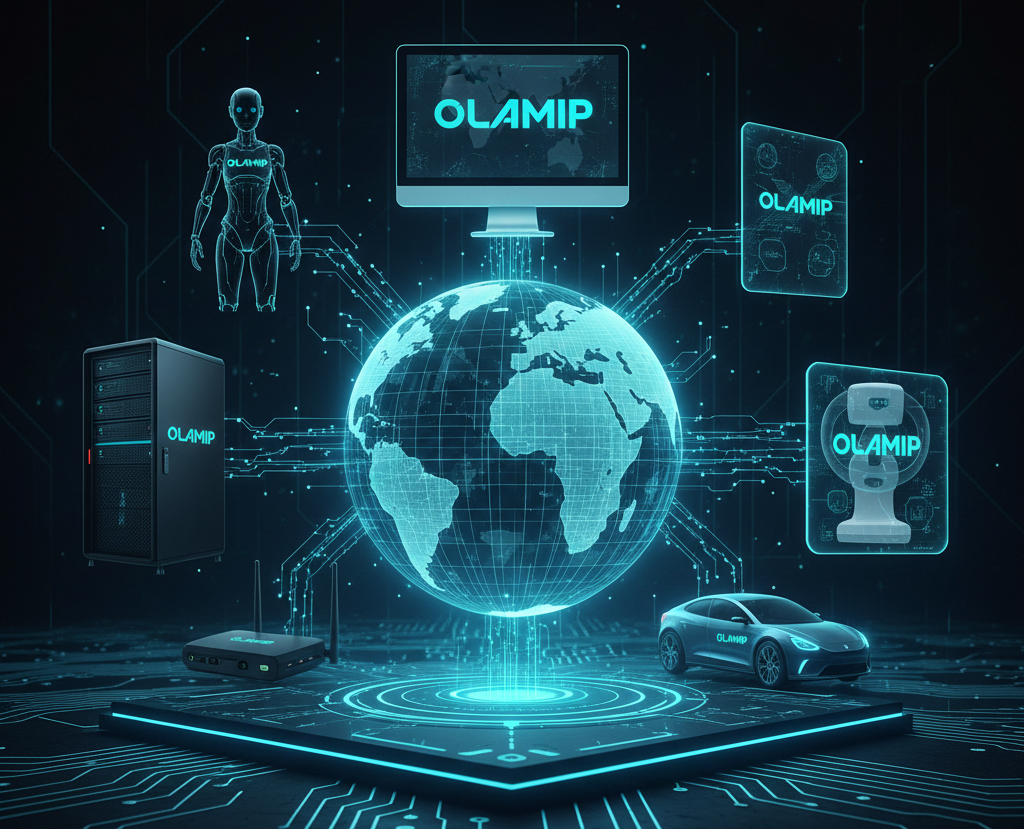
OLAMIP (Open Language‑Aligned Machine‑Interpretable Protocol) solves this problem by giving AI systems a structured, machine‑readable map of what a website means. It’s not a general semantic layer for all data; it’s a protocol specifically built to help LLMs and AI agents understand websites with precision.
Here’s why every AI‑powered product that connects to the web needs OLAMIP.
AI‑powered products that rely on the web need OLAMIP because HTML alone doesn’t give models the semantic clarity required for accurate interpretation. OLAMIP provides a structured JSON sitemap that defines summaries, content types, hierarchy, tags, and canonical URLs, allowing AI systems to understand what each page means instead of guessing from noisy markup. This improves retrieval, reduces hallucinations, strengthens multi‑agent workflows, and gives web‑connected AI products a reliable semantic foundation.
1. Semantic Clarity for Web‑Based AI Interpretation
AI systems don’t “see” webpages; they receive extracted text stripped of visual cues. Without semantic signals, they must guess which parts matter.
OLAMIP provides:
- Clear summaries of each page
- Explicit content types (e.g., doc_page, product, blog_article)
- Canonical descriptions
- Hierarchical structure
Example: A web-connected support chatbot can instantly distinguish a troubleshooting guide from a marketing page because OLAMIP explicitly labels and summarizes each type of content. For example, it can differentiate between “the light” (a command) and “light reading” (an activity), since the metadata clearly defines intent, object type, and context.
2. Reliable Cross‑System Interoperability for Web Agents
AI products that interact with the web, browsing agents, retrieval systems, and assistants must interpret thousands of site structures.
Without OLAMIP, each site becomes a custom parsing problem.
With OLAMIP, AI systems get:
- A predictable JSON manifest
- Standardized fields
- Consistent terminology
- Machine‑readable content boundaries
Example: A travel assistant can reliably extract hotel policies and cancellation rules from any OLAMIP‑enabled site; no unpredictable HTML scraping required. The same principle applies to booking systems and patient monitoring tools, which can exchange data seamlessly without manual translation or custom integrations.
3. Explainability and Trust Through Structured Web Meaning
When AI pulls information from the web, users want to know:
- Where the answer came from
- Why the model trusted that source
- How the content was interpreted
OLAMIP supports explainability by providing:
- Canonical URLs
- Summaries under 500 characters
- Tags that define topical meaning
- Priority indicators
Example: A medical assistant can demonstrate that its response originates from a high‑priority, canonical “doc_page” entry rather than from an arbitrary blog post. Similarly, a financial assistant using OLAMIP can justify its investment recommendation by referencing structured metadata that encodes market trends, user risk profiles, and regulatory constraints.
4. Real‑Time Adaptability for Web‑Connected AI
Web content changes constantly. AI systems need structured signals to adapt.
OLAMIP enables:
- Versioned updates
- Temporal metadata
- Optional delta files for incremental changes
Example: A price‑monitoring agent can instantly detect updated product entries through OLAMIP, eliminating the need to re‑scrape entire pages. It can also adjust tone, product suggestions, and promotional offers dynamically based on factors such as time of day, inventory levels, and customer sentiment.
5. Governance and Safety
AI systems must avoid ingesting:
- Ads
- Cookie banners
- Legal disclaimers
- Irrelevant UI text
HTML doesn’t distinguish these. OLAMIP does.
It provides:
- Policy fields (“allow” or “forbid”)
- Priority signals
- Clear content boundaries
- Language metadata
Example: A multilingual assistant can prevent mixing English and Spanish content because OLAMIP explicitly labels language at both the section and entry levels. It can also interpret emergency protocols and operator permissions as structured metadata, enabling the AI to reason about them accurately and contextually.
6. Industry‑Agnostic Benefits for Any Product That Reads the Web
Any AI product that consumes web content benefits from OLAMIP:
- Healthcare: interpret documentation pages safely
- Finance: distinguish legal pages from product pages
- Retail: extract product details without scraping
- Education: classify learning resources
- Enterprise: power internal agents that browse external sites
If your product reads the web, OLAMIP gives it semantic clarity.
7. Multi‑Agent Collaboration on Web Tasks
AI ecosystems increasingly rely on specialized agents:
- Browsing agents
- Retrieval agents
- Planning agents
- Execution agents
OLAMIP gives them a shared semantic substrate.
Example: A research assistant’s retriever agent can fetch the right “research_paper” entries, while the planner agent uses summaries and tags to build reasoning chains.
8. Reduced Development Overhead for Web‑Connected AI
Without OLAMIP, teams must build custom scrapers, heuristics, and classifiers for every site.
With OLAMIP:
- No custom parsing
- No brittle DOM logic
- No guesswork about content types
- No ambiguity about meaning
Example: A startup building a web‑connected AI agent can rely on OLAMIP instead of building a custom ontology or scraper for each domain.
9. Better User Experience Through Accurate Web Interpretation
Users expect AI systems to:
- Understand context
- Provide accurate answers
- Avoid hallucinations
- Stay consistent
OLAMIP improves UX by giving AI systems structured meaning instead of noisy HTML.
Example: A shopping assistant can reliably extract product specs, reviews, and FAQs because OLAMIP encodes them as structured entries.
10. Future‑Proofing AI Products That Depend on the Web
The web is evolving into a dual‑readability environment: human‑visual + machine‑semantic.
OLAMIP is built for this future:
- JSON‑based
- Forward‑compatible
- Extensible metadata
- Hierarchical structure
- Clear semantic types
As AI agents become more autonomous, OLAMIP becomes the semantic API of the web.
Conclusion
Any AI‑powered product that connects to the web faces the same challenge: HTML was built for humans, not machines. AI systems need structured meaning, not visual markup.
OLAMIP provides that missing layer.
It transforms websites into machine‑interpretable knowledge sources, enabling AI systems to operate with clarity, reliability, and semantic precision.
If your product reads, retrieves, summarizes, or reasons over web content, OLAMIP isn’t optional; it’s foundational.
In a world where AI increasingly depends on the web, OLAMIP is the protocol that makes the web understandable.