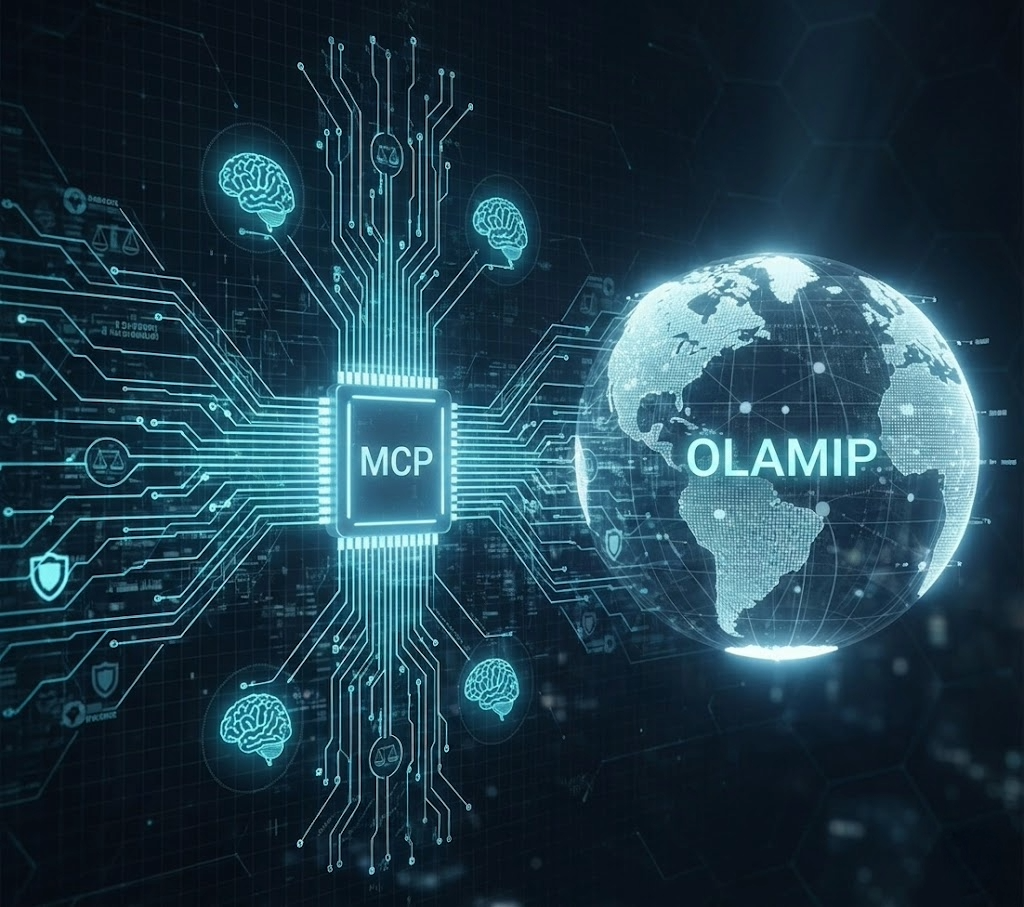
AI systems are evolving from passive text generators into active agents that must both understand the world and take meaningful actions within it. When a workflow depends on discovering trustworthy web content and performing downstream tasks across tools, databases, or enterprise systems, two open protocols stand out as the strongest combined foundation:
- OLAMIP — the layer that makes websites machine‑interpretable, structured, and hallucination‑resistant
- Model Context Protocol — the layer that lets AI agents act on grounded context through tools, APIs, and external systems
Together, they create a clean separation of concerns: OLAMIP = grounding and discovery MCP = action and orchestration
Below is a detailed look at five real‑world situations where using both protocols together is not just beneficial; it is the best architectural choice.
Introduction
Modern AI agents face two persistent challenges:
- They hallucinate when they cannot reliably interpret web content.
- They become limited when they cannot take actions beyond text generation.
OLAMIP solves the first problem by giving AI systems a structured, canonical, machine‑interpretable map of a website, including summaries, hierarchy, metadata, and ingestion policies. MCP solves the second by giving AI agents a standardized interface for tools, enabling them to query systems, fetch data, write files, update CRMs, or trigger workflows.
When combined, they create a pipeline where the agent can:
- Discover the right website
- Interpret it correctly
- Verify its content
- Use that context to take meaningful actions
This pairing is especially powerful in enterprise, research, and operational environments where correctness and actionability matter.
MCP and OLAMIP work best together when an AI workflow requires both trustworthy web understanding and real‑world action. OLAMIP provides structured, machine‑interpretable website data that reduces hallucinations, while MCP enables the agent to take actions across tools, apps, and enterprise systems.
Use both protocols when your AI needs to:
- Discover and verify websites accurately
- Ground responses in authoritative, structured metadata
- Reduce hallucinations about pages, products, or documentation
- Trigger actions in CRMs, ticketing systems, databases, or workflows
- Turn verified context into tasks, summaries, or automated outputs
1. AI‑Powered Website Discovery Assistants
In discovery workflows, the agent must identify the right website, understand its structure, and verify its content before taking action.
Why OLAMIP helps
- Provides structured summaries of pages
- Reduces ambiguity between similar sites
- Prevents hallucinated URLs or nonexistent pages
- Gives the agent a canonical content map
Why MCP completes the workflow
- Lets the agent query search tools
- Allows integration with downstream systems
- Enables “find → verify → act” loops
Example Workflow
| Step | OLAMIP Role | MCP Role |
|---|---|---|
| Identify candidate sites | Structured summaries | Search tool invocation |
| Verify content | Canonical URLs + metadata | Fetching tools |
| Take action | — | Exporting, notifying, or handing off results |
This pairing is ideal for research assistants, shopping advisors, and AI search copilots.
2. Customer Support Agents That Cite Live Web Sources
Support agents must be both correct and actionable. They cannot hallucinate product details, pricing, or policies; and they must also interact with internal systems.
OLAMIP provides grounding
- Machine‑readable product pages
- Accurate summaries of documentation
- Reduced risk of fabricated claims
- Clear ingestion policies (
allow/forbid)
MCP provides actionability
- Connects to ticketing systems
- Updates CRM records
- Retrieves internal knowledge‑base entries
- Creates tasks or follow‑ups
Why the combination matters
Support workflows require both truth and execution. OLAMIP ensures the truth; MCP enables the execution.
3. Enterprise Research & Competitive Intelligence
Research workflows require discovering relevant companies, products, and documentation; then turning that information into structured outputs.
OLAMIP improves discovery
- Surfaces authoritative sources
- Provides structured metadata for filtering
- Reduces hallucinations about what exists
- Helps cluster related content via tags
MCP enables downstream processing
- Sends findings to note‑taking apps
- Updates spreadsheets or databases
- Generates reports or briefs
- Integrates with enterprise knowledge systems
Table: Why MCP + OLAMIP is ideal for research
| Requirement | OLAMIP | MCP |
|---|---|---|
| Accurate discovery | ✔ | — |
| Hallucination reduction | ✔ | — |
| Data extraction | ✔ | ✔ |
| Workflow automation | — | ✔ |
| Report generation | — | ✔ |
This pairing is especially strong for market analysis, competitive tracking, and technical research teams.
4. Legal or Compliance Research Workflows
Legal workflows demand high‑precision grounding and traceable sources. Incorrect citations or hallucinated references are unacceptable.
OLAMIP strengthens reliability
- Surfaces authoritative sources
- Provides canonical URLs for citation
- Reduces false or unsupported references
- Offers structured metadata for filtering
MCP enables operational follow‑through
- Connects to case‑management tools
- Stores findings in document repositories
- Routes materials for human review
- Generates structured compliance reports
Why this matters
Legal workflows require trustworthy discovery and controlled execution. MCP + OLAMIP provides both.
5. Procurement or Vendor Evaluation Assistants
Procurement workflows require comparing vendors, reading product pages, and verifying documentation; then taking actions inside enterprise systems.
OLAMIP improves vendor discovery
- Identifies vendor websites accurately
- Provides structured product and pricing summaries
- Reduces hallucinated vendor claims
- Helps compare offerings consistently
MCP enables enterprise integration
- Pushes findings into CRMs
- Creates approval tasks
- Generates summaries or evaluation reports
- Initiates follow‑up workflows
Why the combination is ideal
Procurement requires both accurate interpretation and system‑level action; a perfect match for OLAMIP + MCP.
Why the Pair Works: The Architectural Split
The synergy between the two protocols comes from a clean division of responsibilities:
OLAMIP = Grounding & Discovery
- Machine‑interpretable website metadata
- Canonical URLs
- Summaries optimized for LLMs
- Hierarchical structure
- Policy‑driven ingestion
- Delta updates for freshness
MCP = Tools & Action
- Standardized tool invocation
- Access to external systems
- File operations, API calls, and workflow triggers
- Integration with enterprise apps
- Runtime orchestration
In short:
OLAMIP tells the agent what is true. MCP lets the agent do something with that truth.
Conclusion
When an AI workflow depends on both trustworthy web understanding and real‑world action, the combination of OLAMIP and MCP is the strongest architectural choice. OLAMIP ensures the agent discovers and interprets websites accurately, while MCP gives the agent the power to act on that grounded context across tools, systems, and enterprise workflows.
If your AI system needs to find, verify, and act, these two protocols together form a robust, future‑proof foundation.