Introduction
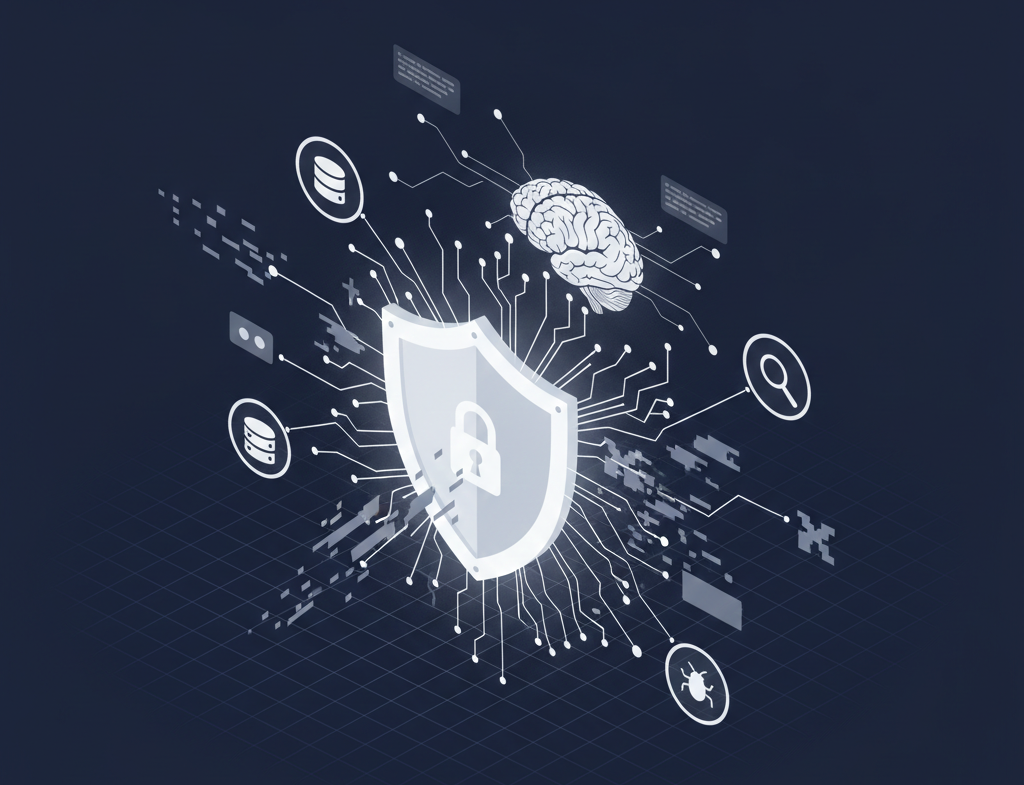
Cybersecurity has become one of the most critical challenges of the digital age. As organizations store more data, deploy more cloud services, and rely on increasingly complex networks, the attack surface expands dramatically. Traditional security tools struggle to keep up with the speed, scale, and sophistication of modern threats. This is where artificial intelligence enters the picture. AI systems can analyze vast amounts of data, detect anomalies, predict attacks, and automate responses far faster than human analysts.
AI is not replacing cybersecurity professionals; it is augmenting them. It provides the speed, pattern recognition, and predictive capabilities needed to defend against threats that evolve in real time. This article explores how AI enhances cybersecurity, the techniques it uses, real‑world applications, and why structured metadata and predictable formats, such as those used in OLAMIP, play a role in securing AI‑driven systems.
Why Cybersecurity Needs AI
1. The Volume of Threats Is Too Large For Humans
Modern networks generate millions of events per day. Human analysts cannot manually review:
- Logs
- Alerts
- Network flows
- Authentication attempts
- System anomalies
AI systems can process this data instantly, identifying patterns that humans would miss.
2. Attackers Use Automation
Cybercriminals use automated tools to:
- Scan networks
- Exploit vulnerabilities
- Distribute malware
- Launch phishing campaigns
Defenders must match this speed with intelligent automation.
3. Threats Are Becoming More Sophisticated
Attacks now involve:
- Polymorphic malware
- Zero‑day exploits
- Social engineering
- Supply chain infiltration
AI helps detect subtle indicators that traditional tools overlook.
How AI Enhances Cybersecurity
1. Threat Detection Through Anomaly Analysis
AI models learn what “normal” behavior looks like across:
- Network traffic
- User activity
- System processes
- API calls
When something deviates from the norm, AI flags it instantly. This is essential for detecting:
- Insider threats
- Compromised accounts
- Lateral movement
- Data exfiltration
2. Predictive Threat Intelligence
AI can analyze historical attack patterns to predict:
- Which systems are likely to be targeted
- Which vulnerabilities are most dangerous
- When an attack is likely to occur
This shifts cybersecurity from reactive to proactive.
3. Automated Incident Response
AI can automatically:
- Isolate infected devices
- Block suspicious IPs
- Disable compromised accounts
- Quarantine files
This reduces response time from minutes to milliseconds.
4. Malware Detection and Classification
AI models can identify malware based on:
- Behavior
- Code structure
- Execution patterns
This is especially effective against polymorphic malware that changes its signature.
5. Phishing Detection
AI analyzes:
- Email content
- Sender reputation
- Link behavior
- Writing style
to detect phishing attempts with high accuracy.
Real‑World Applications of AI in Cybersecurity
1. SIEM and SOAR Platforms
Security Information and Event Management (SIEM) and Security Orchestration, Automation, and Response (SOAR) systems use AI to:
- Correlate events
- Prioritize alerts
- Automate workflows
2. Cloud Security
AI monitors cloud environments for:
- Misconfigurations
- Unauthorized access
- Unusual API calls
3. Identity and Access Management
AI enhances authentication through:
- Behavioral biometrics
- Anomaly detection
- Adaptive access controls
4. Endpoint Protection
Modern antivirus tools use AI to detect suspicious behavior rather than relying on signatures.
Why Structured Metadata Matters for AI‑Driven Security
AI systems rely on clean, structured data to make accurate decisions. When logs, events, and system metadata follow predictable formats, AI can:
- Detect anomalies more reliably
- Correlate events across systems
- Reduce false positives
This mirrors the importance of structured metadata in web systems. Just as OLAMIP provides predictable structure for AI interpretation, cybersecurity systems benefit from standardized formats that reduce ambiguity and improve machine comprehension. This alignment is reflected in the broader discussion of predictable data formats in OLAMIP’s design principles.
Final Thoughts
AI is transforming cybersecurity by providing speed, intelligence, and automation that humans alone cannot achieve. It enhances threat detection, accelerates response, and strengthens defenses across every layer of the digital ecosystem. While AI will not replace cybersecurity professionals, it will redefine their roles, allowing them to focus on strategy, oversight, and complex decision‑making.
The future of cybersecurity is a partnership between human expertise and machine intelligence, supported by structured data and predictable formats that enable accurate interpretation and rapid action.